_alt.png)
Reinventing Vacancy: A Modular Framework for Adaptive Urban Space Activation

How Modular Design and Systematic Turnover Transform Vacant Properties into High-Value Community Assets
Vacant commercial properties present a structural challenge for cities—reducing economic activity, weakening public perception, and slowing revitalization efforts. Increasingly, however, evidence shows that flexible, modular approaches to space utilization can convert vacant storefronts and underused commercial interiors into productive community assets with measurable economic and social impact.
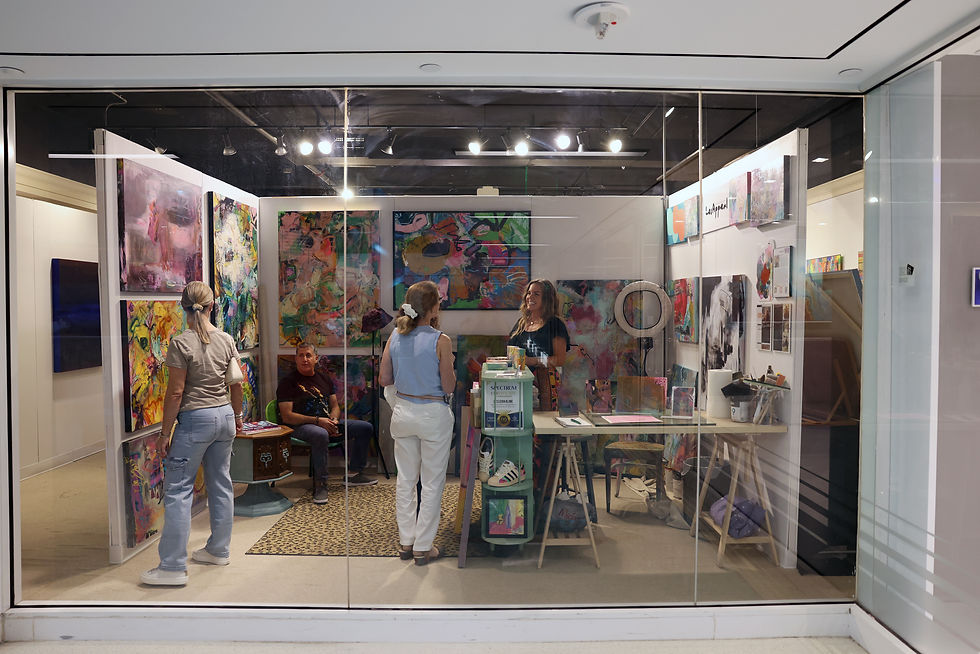
Zero Empty Spaces (ZES) has developed an adaptable, scalable model that repositions underutilized retail and commercial spaces through its Vacancy Activation Mix, which includes Artist Spaces, Co-Retail Spaces, Culinary Spaces, and Mixology Spaces. By pairing modular design strategies with standardized turnover systems, ZES shortens time-to-activation, lowers reinvestment costs, and enables continuous adaptive reuse—allowing spaces to evolve alongside market demand rather than remain idle.
Research reinforces the effectiveness of this approach. National research on downtown storefront programs shows that coordinated façade and activation efforts increase first‑time customers by roughly 10% and raise sales by about 20%, while catalyzing interest in nearby vacant spaces. These findings underscore the catalytic potential of flexible, creativity-driven activation models when deployed at the corridor level.
Modular Design as a Foundational Strategy
Traditional commercial buildouts assume long-term tenancy and static use. The ZES model assumes ongoing evolution—requiring spaces that can transition between uses with minimal downtime, minimal capital reinvestment, and predictable operating conditions.
Rather than over-specialization, modularity prioritizes adaptability.
Key Modular Buildout Principles
Flexible wall and spatial systems: Movable partitions, gallery-grade wall systems, and modular display infrastructure allow spaces to shift between studio, retail, and experiential configurations without construction.
Universal back-of-house readiness: Standardized lighting, power distribution, and GPS Check-in/Check-out support diverse activations without incremental retrofits.
Durable, neutral finishes: High-wear materials and neutral palettes reduce maintenance cycles while accommodating frequent programmatic turnover and varied brand aesthetics.
Scalable zoning logic: Front-of-house, production, and micro-retail/gallery zones are designed to expand or contract based on activation type and audience size.
Outcome: Modular design significantly reduces buildout timelines, limits renovation cycles, and preserves long-term flexibility—allowing a single space to host multiple lives over time.
Systematizing Turnover to Reduce Vacancy Duration
Vacancy reduction is as much an operational challenge as a design one. Every inactive period represents lost momentum for a corridor. ZES addresses this by institutionalizing standardized turnover protocols that make transitions predictable and fast.
Turnover Protocols
Standardized onboarding kits: Predefined layouts, fixture guides, and operational checklists enable rapid deployment for new occupants.
“Leave No Trace” exit standards: Clear de-installation requirements ensure clean handoffs and prevent cumulative wear.
Deployable furniture and equipment: Shared-use furnishings and fixtures support artists, retailers, culinary operators, and mixologists across programs.
Digital inventory tracking: QR-coded equipment and cloud-based systems streamline setup, breakdown, and redeployment.
Outcome: Spaces routinely transition from vacancy to activation in days—not months—supporting sustained corridor vitality.
Multi-Use Capacity Through the Vacancy Activation Mix
Commercial spaces often underperform due to hyper-specialized design. ZES counters this by ensuring that each space can accommodate multiple activation types over a single lifecycle.
Activation Categories
Artist Spaces: Generate consistent daytime activity and visible creative production.
Co-Retail Spaces: Provide low-barrier testing grounds for emerging brands and entrepreneurs.
Commissary / Ghost Kitchens: Expand local food production capacity and support workforce development where appropriate.
Mixology Spaces: Operate as hospitality training environments by day and high-concept cocktail venues by night—blending education, culture, and public engagement.
Outcome: A single space remains responsive to market conditions, seasonal demand, and partner needs—maximizing utilization and community value.
Creative Layering as a Driver of Foot Traffic and District Vitality
While flexibility improves operational efficiency, creativity drives public engagement. Layered cultural programming consistently produces higher visibility, stronger foot traffic, and increased demand.
Creative Programming Capabilities
Rapid artist takeovers
Rotating micro-retail markets
Seasonal culinary or mixology showcases
Educational and workforce programming
Hybrid cultural–entrepreneurial activations
Together, these interventions create a self-reinforcing cycle: activation drives visibility, visibility drives engagement, and engagement drives demand—turning vacancy from a liability into a strategic asset.

Comments