_alt.png)
How Zero Empty Spaces Make Cities More Inclusive, Safe, Resilient, and Sustainable

Cities are living systems. When they thrive, they offer opportunity, creativity, and connection. When they struggle, the symptoms are often visible: vacant storefronts, underutilized buildings, and disengaged communities. These empty spaces are more than just economic inefficiencies—they can erode safety, limit inclusion, and weaken a city’s long-term resilience.
Zero Empty Spaces (ZES) presents a practical, scalable solution to this challenge by transforming vacancies into active, community-driven environments. By activating unused real estate with artists, entrepreneurs, and local programming, ZES doesn’t just fill space—it reshapes how cities function. The result is a more inclusive, safe, resilient, and sustainable urban ecosystem.
Inclusion: Lowering Barriers to Opportunity
One of the biggest barriers in cities today is access—access to space, visibility, and economic participation. Traditional retail and commercial leases are often out of reach for emerging entrepreneurs, artists, and small-scale creators.
Zero Empty Spaces addresses this by:
Offering affordable, flexible access to space
Creating entry points for underrepresented communities
Supporting local talent without requiring long-term financial risk
This model democratizes urban participation. Instead of cities being shaped only by large corporations or well-funded businesses, they become platforms where diverse voices can be seen and heard.
Inclusion here isn’t abstract—it’s physical. It’s a local artist opening a studio, a small brand testing a concept, or a community group hosting events in a previously inaccessible space.
Safety: Activating Space to Reduce Crime
Vacant spaces often attract unwanted activity. Darkness, neglect, and lack of foot traffic create environments where crime can take root. Urban safety isn’t just about policing—it’s about presence.
ZES improves safety through:
Increased foot traffic
Continuous occupancy and visibility
Community ownership of space
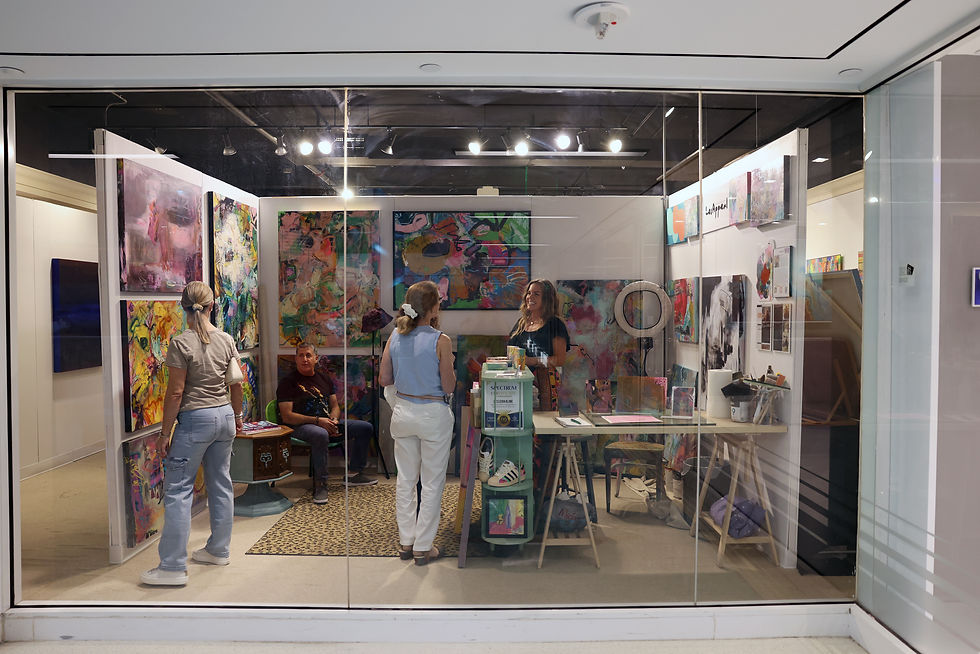
When a once-empty storefront becomes a working studio or pop-up retail space, it naturally invites people in. Light replaces darkness. Activity replaces abandonment. The presence of artists, customers, and neighbors creates informal surveillance—often referred to as “eyes on the street.”
This shift transforms perception as well. A block that once felt unsafe begins to feel welcoming and alive.
Resilience: Adapting to Economic Change
Cities are constantly evolving. Retail trends shift, industries rise and fall, and economic disruptions—like pandemics or market downturns—can leave large amounts of space unused.
Zero Empty Spaces builds resilience by:
Providing adaptive reuse of existing spaces
Allowing temporary activation while long-term tenants are sought
Supporting micro-economies that can pivot quickly
Instead of waiting months or years for a traditional tenant, property owners can immediately activate their spaces. This keeps neighborhoods economically active even during uncertain times.
At a broader level, ZES strengthens local economies by:
Encouraging entrepreneurial experimentation
Reducing reliance on a small number of large tenants
Creating a diverse ecosystem of small businesses
Resilient cities are not those that avoid change—but those that can adapt quickly. ZES turns vacancy from a liability into an asset.
Sustainability: Making Better Use of Existing Resources
Sustainability in cities isn’t just about energy or transportation—it’s also about how efficiently we use the built environment.
Vacant spaces represent:
Wasted infrastructure
Embodied carbon sitting idle
Missed economic and social value
Zero Empty Spaces promotes sustainability by:
Reusing existing buildings instead of requiring new construction
Maximizing the utility of already-developed urban areas
Encouraging local production and consumption
By activating what already exists, ZES reduces the need for new materials, lowers environmental impact, and supports more localized, circular economies.
Additionally, shorter-term, flexible uses mean spaces can evolve without major renovations, further minimizing waste.
A New Model for Urban Revitalization
Traditional urban revitalization often relies on large-scale development projects, which can be slow, expensive, and sometimes exclusionary. Zero Empty Spaces offers a complementary approach—one that is:
Faster to implement
Lower in cost
Rooted in community participation
Rather than waiting for transformation, ZES enables immediate activation. It turns passive real estate into active community infrastructure.
This approach also benefits property owners by:
Reducing vacancy costs
Increasing property visibility
Attracting future long-term tenants
It creates alignment between landlords, cities, and communities—something that is often missing in urban development.
From Empty to Empowered
Empty spaces are not just physical gaps—they represent missed opportunities for connection, creativity, and growth. Zero Empty Spaces reframes vacancy as potential.
By activating unused spaces, cities become:
More inclusive, by opening doors to diverse participants
Safer, through activity and presence
More resilient, by adapting to change
More sustainable, by maximizing existing resources
The impact is both immediate and long-term. A single activated storefront can change a block. A network of activated spaces can transform a neighborhood. Scaled across a city, the effect is profound.
In a time when cities are searching for practical, human-centered solutions, Zero Empty Spaces offers something powerful: a way to build better urban environments—not by adding more, but by using what we already have.

Comments